
Understanding the Standards for Mat Progression
Stepping onto the mats marks the beginning of an exacting physical and cerebral journey where clear technical standards define each practitioner's growth. Dedicated martial artists aiming to advance must understand the formal bjj blue belt requirements that govern technical competence, personal discipline, and defensive mastery. In Frenchs Forest, Sydney, learning how to survive and navigate inferior positions systematically provides the true foundation for this first major promotion.
Reaching this stage is not merely a test of physical endurance or brute athletic effort. Dedicated instruction at Gracie Barra Sydney, Frenchs Forest focuses on imparting repeatable mechanical principles over arbitrary moves, ensuring students build sound structural habits rather than relying on frantic exertion during live sparring rounds.

Foundational Defensive Postures and Survival Fundamentals
Survival forms the bedrock of early grappling education. A practitioner must master anatomical alignment and posture before any reliable attacking game can develop.
Structural Framing and Elbow-Knee Connection
Maintaining strong frames prevents heavier training partners from collapsing your chest and flattening your spine on the mat. By connecting the elbows directly to the pelvic line, a student builds rigid mechanical barriers that neutralise direct pressure.
This positional discipline prevents premature exhaustion during extended rounds under bottom side control. Establishing consistent frames ensures that escapes rely on efficient bone support rather than unsustainable muscular tension.
Surviving and Neutralising the Mount Position
Surviving bottom mount demands absolute composure, rhythmic breathing, and defensive arm positioning close to the torso. Leaving limbs extended or turning flat presents immediate openings for high-percentage submissions like armbars and chokes.
A student learns to protect the neck using collar frames while keeping active feet on the mat to disrupt the top player's base. Consistent posture under mount proves whether a grappler can manage intense pressure calmly.
Mitigating Pressure Under Cross-Face Side Control
Bottom side control can severely compromise airway stability and spinal alignment if the top player secures a deep cross-face. Turning slightly toward the partner while tucking the chin counters this driving forward momentum.
Once structural space opens, the bottom player systematically inserts defensive forearms across the hips and throat. Eliminating direct upper-body flattening is critical for restoring a functional line of movement.
Defending the Back and Preventing Neck Access
Back control represents the most dangerous offensive hierarchy in the art due to the absence of visual tracking. The immediate priority is managing wrists, establishing two-on-one hand control, and protecting both carotid arteries.
Students must consistently fall toward the weak side while securing the underhook side of the harness. Proper head positioning against the mat prevents opponent transitions to high-threat submission finishes.
Primary Escapes and Positional Recovery Methods
Meeting standard bjj blue belt requirements demands consistent execution of escapes across all major bottom positions using technical leverage rather than panic.
The Elbow-Escape and Knee-Elbow Wedge Mechanism
The elbow-escape from mount requires simultaneous bridging and lateral hip displacement across the mat surface. Driving the inside elbow toward the hip creates a tight wedge that captures an overextended limb back into half guard.
Executing this motion smoothly requires precise timing to avoid trapping the leg beneath heavy downward weight. Recovering closed guard from this sequence confirms an intuitive understanding of defensive wedges.
Bridging and Rolling via the Upa Technique
The traditional upa escape capitalises on trapping the opponent's posting arm and same-side ankle tightly against the hips. When the top player shifts forward weight, an explosive diagonal bridge rolls them directly into your guard.
Timing the upward trajectory remains essential for overcoming significant physical mass discrepancies. Combining the upa with the elbow-escape creates an alternating dilemma that makes bottom mount difficult to maintain.
Hip Escaping and Reguarding from Side Control
Recovering the guard from bottom side control depends on deliberate hip mobility rather than pushing with straight arms. Creating sharp angles through repeated shrimping draws the bottom knee across the pelvis to rebuild an active shield.
Practitioners must avoid pushing blindly against the opponent's torso, which exposes vulnerable elbows to swift attack. Coordinated framing and hip movement restore neutral distance reliably.
Positional Control, Takedowns, and Guard Work
Advancing past initial training phases involves demonstrating controlled top transitions, guard manipulation, and baseline standing self-defence concepts.
Closed Guard Maintenance and Posture Disruption
Closed guard serves as both a defensive fortress and an efficient staging platform for attacks. Breaking down the top player's upright spine using active knee pulls and lapel grips limits their offensive options.
Students must identify opportune moments to open the guard without surrendering immediate passing channels. Maintaining constant tension across the torso drains the passing player's forward balance.
Fundamental Passing Principles and Base Stability
Passing the guard demands upright posture, stable hip positioning, and strict grip denial. Students learn to dismantle defensive shields by applying continuous pressure through precise knee-slice or bullfighter passing movements.
A technical guard pass prioritises total positional control before searching for submission attempts. Maintaining balance during side transitions prevents unintentional sweeps from mobile training partners.
Basic Takedown Mechanics and Standing Distance Management
Grappling always commences from a standing neutral stance, requiring disciplined posture and footwork. Securing dominant collar-and-sleeve control prevents unhindered takedown entries from aggressive sparring partners.
Competent practitioners execute fundamental level changes, body locks, and outer sweeps with calculated timing. Safely guiding the training partner to the canvas ensures immediate top position upon ground contact.
Technical Consistency and Sparring Etiquette
Technical knowledge must translate into controlled, responsible execution during live rolling sessions. True readiness is demonstrated by recognising submission threats early, tapping without hesitation, and protecting training partners through disciplined control.
At Gracie Barra Sydney, Frenchs Forest, regular mat time emphasises respect, sportsmanship, and personal growth over ego-driven competition. Students learn that technical precision consistently triumphs over erratic physical intensity.

Measuring Technical Growth and Positional Competence
Advancement in Brazilian Jiu-Jitsu is never measured merely by how many training partners you submit in daily rolling. Real progression appears in how seamlessly you absorb defensive pressure, maintain tactical composure, and apply mechanical leverage.
Refining fundamental techniques consistently allows students to navigate challenging sparring rounds with composure. Clear technical benchmarks ensure practitioners build long-term confidence and resilience across every phase of the sport.
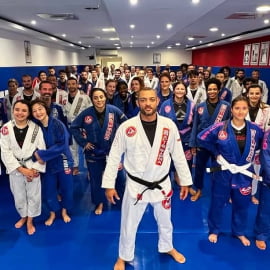
Embracing the Journey Beyond the White Belt
Meeting the foundational bjj blue belt requirements marks a pivotal transformation in any practitioner's martial arts journey. By prioritising structural survival, reliable escapes, and composed guard control, grapplers build an unshakeable platform for lifelong technical learning.
Whether your personal goals centre on self-defence, physical fitness, or technical development in Frenchs Forest, Sydney, committing to structured fundamentals remains paramount. Dedicate yourself to the mat journey, train with intention, and embrace every phase of personal progress.
