Helping children regain focus and embrace effort through Jiu-Jitsu
In a world of endless screen time and short attention spans, children are often overstimulated, underchallenged, and disconnected from reality. But there’s a simple, powerful way to help them find focus, confidence, and fulfilment again—on the mat, through Brazilian Jiu-Jitsu.
THE DOPAMINE DILEMMA: WHY SCREENS HOOK KIDS SO EASILY
Children today are growing up in a world where dopamine-driven technology is everywhere—smartphones, video games, YouTube, social media. Every swipe, like, and level-up triggers a dopamine release, the brain’s “feel-good” chemical. It’s the same chemical involved in reward and motivation.
But here’s the problem: dopamine loves the quick fix.
This flood of instant gratification rewires a child’s brain, training it to expect constant stimulation. As a result, many children are becoming:
- Easily bored
- Emotionally dysregulated
- Struggling with focus and patience
- Prone to anxiety and low mood
Studies back this up. A 2023 study in the European Journal of Paediatrics found that children who spent more than two hours a day on screens were far more likely to experience anxiety, low mood, and poor emotional regulation. Similarly, The Lancet reported a 25% higher risk of depressive symptoms in children exceeding that threshold.
SCREEN TIME AND SLEEP: A VICIOUS CYCLE
Even sleep is being affected. The blue light from screens can suppress melatonin (the sleep hormone), but it’s not just the light—it’s the mental stimulation. Video games, TikToks, and even cartoons before bed can keep young minds wired long past bedtime, leading to:
- Difficulty falling or staying asleep
- Daytime fatigue and irritability
- Reduced memory and concentration
Research from Oxford University has shown that screen use before bed leads to poorer sleep and cognitive impairment the next day—especially in children.
WHAT’S HAPPENING IN THE BRAIN?
Recent findings in The Guardian (2024) reveal how internet addiction is changing the structure of the brain, particularly in young people. Children with high screen use showed reduced connectivity in areas responsible for decision-making, memory, and emotional control—skills crucial for both academic and personal success.
BRAZILIAN JIU-JITSU: A HEALTHY ALTERNATIVE THAT ACTUALLY WORKS
In contrast to the instant, artificial rewards of screen time, Brazilian Jiu-Jitsu offers real, lasting benefits. It’s hands-on, physically engaging, mentally stimulating—and it builds the kind of character traits screens tend to erode.
- Improves Focus and Self-Discipline
BJJ demands attention to detail, structure, and consistency. Kids learn through repetition, routine, and challenge—all the things that strengthen neural pathways and improve attention span.
A study in the British Journal of Psychology showed that martial arts like BJJ significantly improve self-control, working memory, and academic focus in young participants.
- Builds Confidence Through Real Achievement
Children progress at their own pace in BJJ. Each belt earned, each technique mastered, gives them something screens never can: authentic, earned self-belief.
“You’re not just fighting opponents—you’re overcoming your own limitations,” says John Smith, coach at Gracie Barra London.
According to UCL research, children involved in martial arts report higher self-worth and a more positive body image.
- Develops Social Skills and Empathy
Unlike online platforms, which often promote competition and comparison, BJJ fosters cooperation, respect, and face-to-face communication. Training partners must trust each other—helping children develop empathy and emotional intelligence.
“The respect and teamwork BJJ teaches kids is rare to find elsewhere,” notes Sarah Johnson, coach at Gracie Barra London.
University of Edinburgh research confirms that martial arts help young people build stronger social skills and emotional awareness—vital tools in an increasingly digital world.
- Teaches Resilience and Emotional Regulation
Every child in BJJ learns what it feels like to lose—and to try again. They experience pressure, discomfort, and failure in a safe, supportive environment. This builds resilience, emotional control, and a deep understanding of delayed gratification.
📖 The National Centre for Sport and Exercise Medicine recognises BJJ for its role in teaching emotional regulation and stress management, especially in children and adolescents.
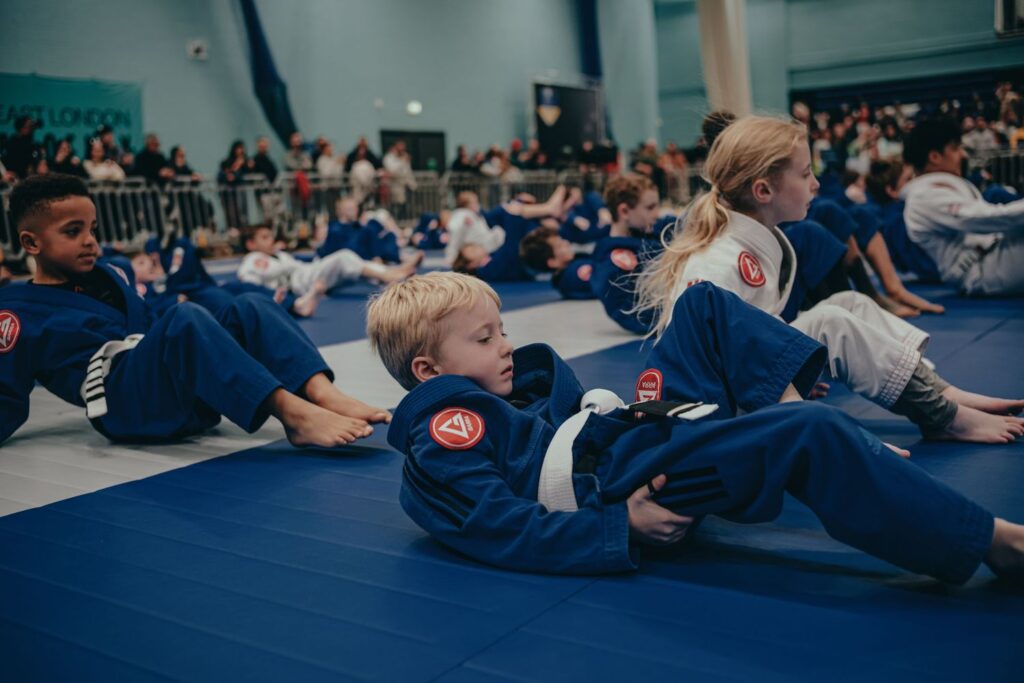
FROM PASSIVE SCREENS TO ACTIVE MASTERY
Making the shift from screen dependency to BJJ isn’t just about cutting back on devices—it’s about helping your child reconnect with the world around them, their body, and their sense of self.
Brazilian Jiu-Jitsu encourages:
- Focused attention
- Purposeful movement
- Emotional resilience
- Stronger friendships
- A sense of earned pride
Most importantly—it gives kids the confidence to face challenges, not swipe past them.
A BETTER WAY FORWARD
If your child is spending hours on screens each day, struggling with focus, or simply lacking motivation, Brazilian Jiu-Jitsu might be exactly what they need.
Most reputable BJJ academies offer children’s classes designed to be fun, supportive, and developmentally appropriate—welcoming children of all fitness levels and personalities.
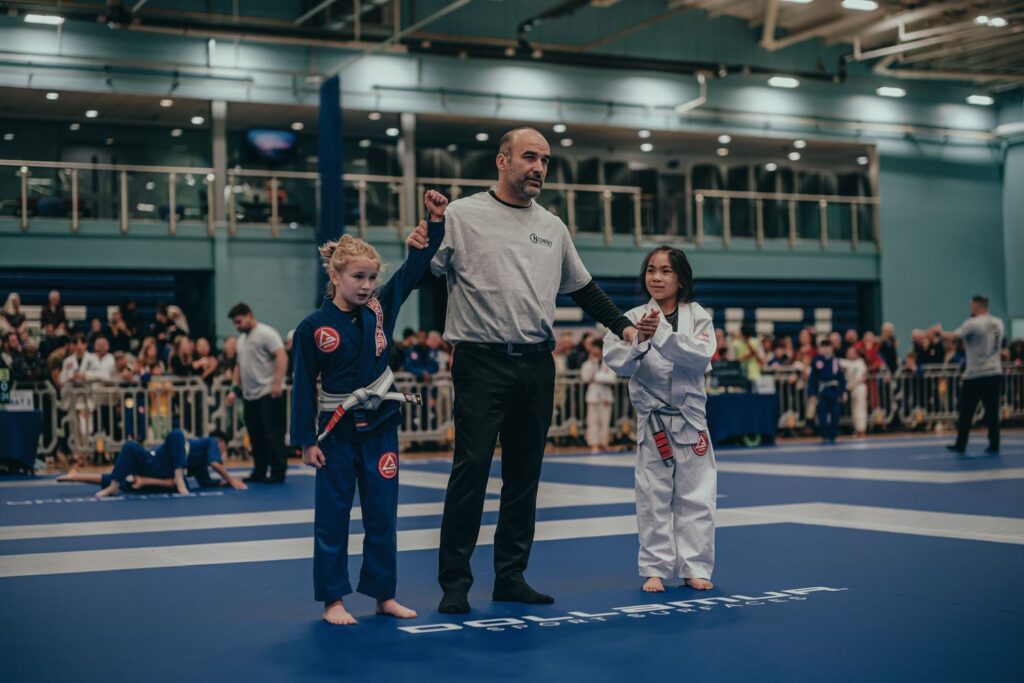
GETTING STARTED!
- Ages: Classes typically start for children as young as 4 or 5.
- What to bring: Comfortable clothes or a gi (uniform); water bottle
- What to expect: Friendly coaches, structured sessions, lots of encouragement
- What they’ll gain: Focus. Strength. Respect. Confidence. Real joy.
FINAL THOUGHTS: FROM DISTRACTION TO DIRECTION
We can’t completely remove screens from our children’s lives—but we can balance them with meaningful, real-world experiences.
Brazilian Jiu-Jitsu doesn’t just offer physical fitness—it provides children with the tools to navigate life with clarity, confidence, and character. In a world full of fast content and fleeting highs, BJJ delivers something slower, stronger, and far more lasting.
“In an age of endless scrolling, give your child the gift of rolling—of grounding, growth, and genuine self-worth.” – Victor Estima

Find your nearest school here.
Stay connected with Gracie Barra Europe on: